
A frog, flattened
The sea foam is as green as the woods that are spaciously shadowing Bulgaria.
The menu at restaurant Afrodita is multilingual: Bulgarian, Greek, English, German. Turkish, the adjacent neighbors language, is missing though. As well as any Turkish guests, who would have requested translating the menu into their language. Instead, there are plaques in honor of the liberation from Ottoman domination in every single village. In the town of Kalofer the portrait of the legendary Hajduk leader who 300 years ago cunningly tricked the occupiers and who gave name to the town is waving Che Guevara-style, printed on buntings attached to street lamps. Even though Kalofer is falling into a state of disrepair the revolutionary spirit continues: the last brigade of activists consists of old women, sweeping in front of their houses and keeping up small town life with their brooms.
There is a long list of meals with German titles on the restaurant's menu, recalling the former expatriates' pride and success. Those who softly close the door of their car with that rich Mercedes sound are not tourists but homecomers or those who come home for vacation. Their black or silver limousines with Stuttgart or Munich license plates are like trophies when they cruise along. The German menu proves the worldly sophistication they acquired abroad.
11 kilometers away from the Turkish boarder tourists are bathing in the Black Sea. The water is as green as the surrounding woods that are reinforcing the country. Even nature seems to serve government, positioning forces against all those that are undesirable but wanting to set their feet on European ground nonetheless.
The pavement winding all the way from central Balkan down to the coast is a street with no opposing traffic. The signs that indicate no passing go back to the times when no freeway connected heartland and seaside resort, stretching the drive to a day trip. Taking the long forgotten trip through nature, one is hoping that the car will not break down on the way. Knee-deep potholes big as paddling pools force you to look on the ground - until you are suddenly asked to stop at a crossing in the woods. Looking up you visit the poker faces of border guards standing around the car, forming a semi circle. They speak Bulgarian and Spanish. I offer French, Italian, English and Russian. When called the officer in charge shows up.
His blue uniform is almost stylish compared to the black and green outfits everyone else wears, merging at dusk with the environment. As if it was a 15 minutes ride and not an adventurous ride of at least 4 hours through thicket and without seeing the sky, I beam at him with a smile: "We're going to the ocean." Our chatting in the brushes is almost friendly until he tells me that he is Croatian. Frantically my mind tried to remember a border between Croatia and Bulgaria. "Well, I go swimming and what are you doing here?" He hesitates for a moment, then answers with a word that does not need further explanation: FRONTEX.
The direction of flight has changed: Back in 1989 countless people tried to escape via Bulgaria into the West. Today, people are stuck at the Turkish border looking into the opposite direction. What used to be the East is now the beginning of the European myth. 1968, it took two GDR citizens in a folding boat 32 hours to cross the ocean from the Bulgarian beach to Turkey. 2012, 37 Afghani, Syrians and Turkmen died, when they tried to go from Istanbul to Romania by boat. He who tries to escape overland, will get tangled up in those roots, that cover the ground like mad old women's strands of hair, turned into wood. Thorny flowers will scratch their skin. He who in despair enters a rubber boat will drown.
When we finally reach the hotel they had given away the room we had booked in advance. They give us an apartment instead - an apartment big enough to accommodate at least four people. When I asked the clerk whether the apartment will be exclusively for us, he answers deliberately but slightly annoyed: We're not a hostel for those … what should I call them … those from Syria …" only to add with a slightly triumphing undertone: "We're not a hostel for refugees!"
PS: It is our second day at Sinemorec. I have found a frog, thin as paper. He tried to transit from one side of the street to the other. He failed.
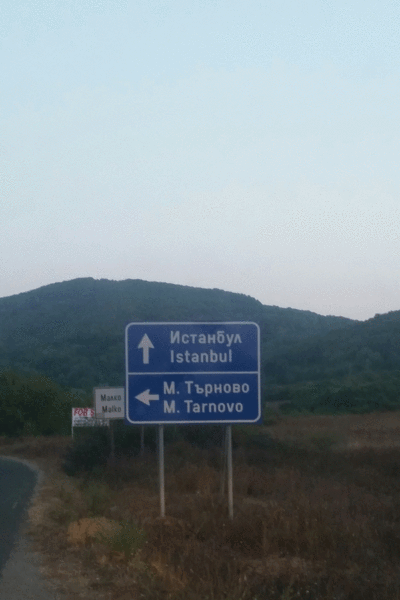
200 Kilometer bis Istanbul
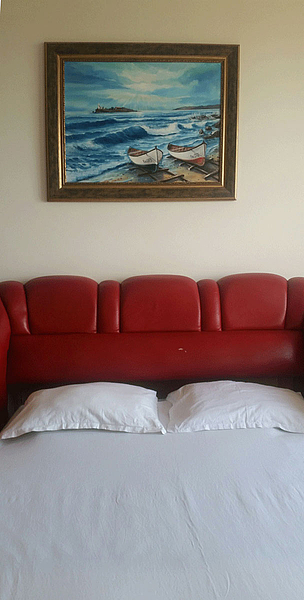
Ferienwohnung Afrodita - kein Hostel für Flüchtlinge
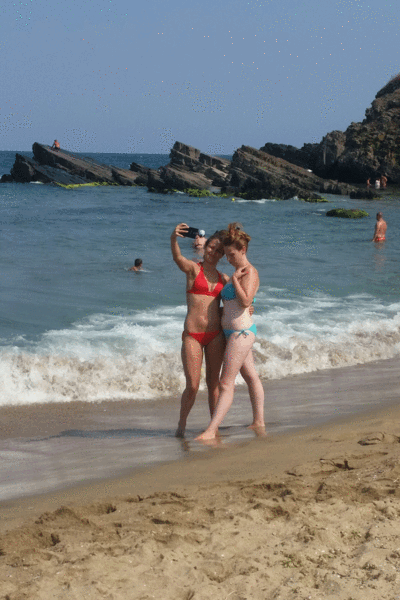
Sommergäste in Sinemorec
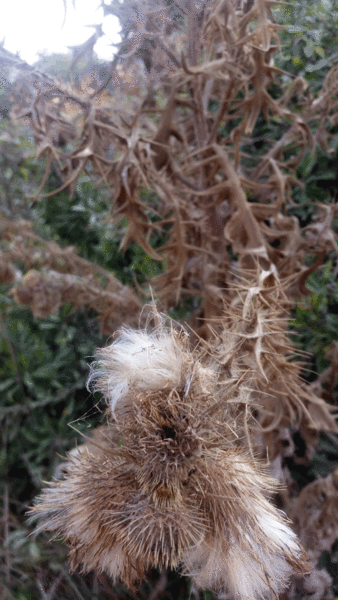
Distel
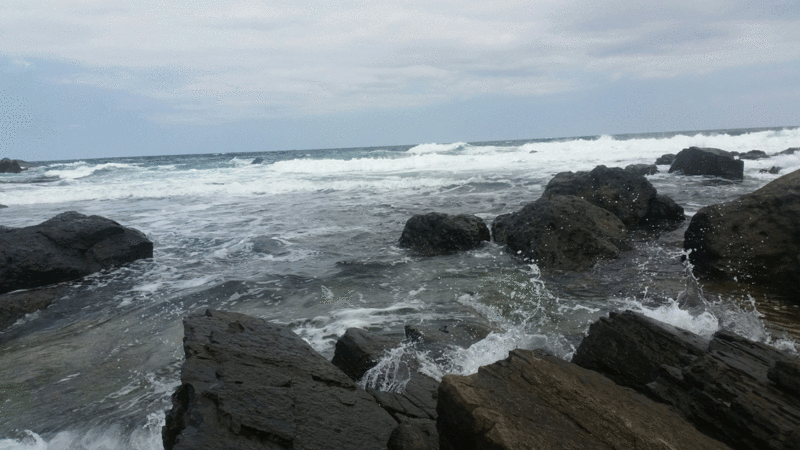
Das Meer bei Sinemorec
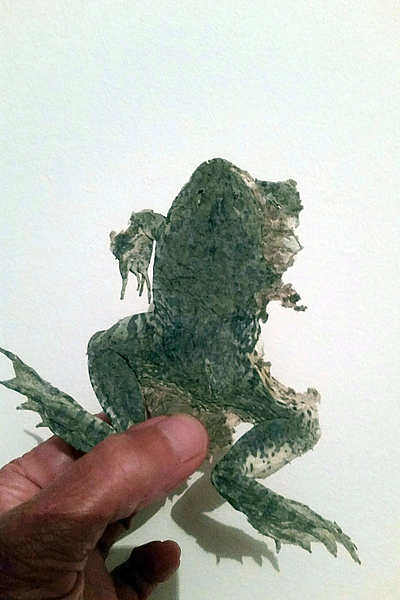
Frosch, platt