
As Time goes by -
I do not remember meeting anyone named Ahmad for the last two and a half years at daHEIM in Staakener Strasse. Back then, it was the time of quite a few Mohammed, Mohammad, Mohamed, Muhammad, Hamudi, Hamoudi and Hamdschi. The latter would refer to himself as Mohammed Dutchland on facebook. We would give them nicknames to avoid confusion. Hence, there was Mohammed Beton (= concrete) and Mohamed Archäologe, Mohamed Soubeh, the archeologist, an expert on Byzantine art. Since 2015, the preciously arranged mosaics he used to maintain - broken fragments now - are buried beneath ruins and ashes. Mohamed the archeologist became the founder of our performing group within KINGS due to his in-depth knowledge of stories and history.
After more than two years, we bowed out of the HEIM at Staakener Strasse. As before, the premises are left idle and fallow, a waste land. No more lawn chairs in the courtyard. No one would know that people live behind the unsightly front, if it wasn’t for the children, looking for the outside to get away from the inside. It’s an asylum now, no longer a home. The story is long and elsewhere to tell.
The drawbar of the building wagon was blocked. Ivan’s gaze was caught in the tree tops. “It was just like that when we were in Bulgaria for 4 days.” The mother of the 12 years old gives instructions on how to steer the building wagon through the woods. “We did not sleep,” Ivan adds. He pays attention to his mother’s doing now. “She has always been like a man,” he grins. The wagon rolls onto the small clearing, which delimits the intercultural garden of the SOS Kinderdorf in Gathow to the forest. The wagon’s glaring colors. Ahlam bents down, digging her hand in the ground, crumbling earth. The Kurdish family did farming in Kamishli. Every herb was worth a bend, she smelled every leaf.
“Love comes slow and goes fast,” Lamin winged the lyrics on losing. The reggae singer stood on the stairs in the entrance of Museum Europäischer Kulturen. Next to him are Babacar, Ebrima, Mustafa. The four men came to Germany from Gambia. A break for the percussion group at KINGS. Zainab is strolling through the garden of dreams. She is Somalian. Zainab now resides where the cigarette company British American Tabacco once produced smokers’ potential needs. The company moved to Bayreuth as early as 1999, but you still find relevant entries when you search for 'Mertensstraße 63' online. In 2015, 450 workplaces of the production site became living space for 800 humans.
Berliner Stadtmission is responsible for the emergency shelter. For more than a year, at Staakener Strasse Bereket was the only representative from West, Central, or East Africa among roughly 100 people from fifteen nations.
The world at the outskirts of Spandau has decreased, due to deportations to Bosnia, Serbia, Kosovo, and Albania. However, it spreads out in all its incomprehensibility in the huge main hall of the converted factory building in Hakenfelde. People are sitting on sofas between plants in hydroculture, lamenting, waiting, the old woman from Vietnam is drowsy, all talking in their smartphones, talking to one another, family members, friends or chance acquaintanceships. The hairdresser has his business, the hungry move to the buffet, and those speeding up the hall with an accelerated step, go to language classes, to see the lawyer, to the municipal office. The Somalian women’s colorful dresses bear witness to the distance they have covered.
Lynchpin, fulcrum – if you have never been in one of the large facilities for asylum seekers, imagine a departure lounge at the airport. The indicator panels remain black and mute. No one knows what's going on for him or her.
We have met so many people since landing with the KINGS’ satellite in Mertensstraße on March 8: painful, the farewell from Staakener Straße, affectionate the welcoming at Mertensstraße. Two days the week, Céline is sharing her textile workshop with us. Being a recycling artist, she is responsible for the useful and beautiful at the same time: from ironing to creation and communication. We met Zainab, Liman and Babacar, Ebrima and Mustafa, Masud, Ali, Bayad and Basim, Aid, Miran, Hani, Ali and Sultana. Some of them are now rehearsing the KINGS together with us at Museum Europäischer Kulturen.
By the way, the Ahmads have nicknames too. One is Ahmad ballet. Then there is Ahmad film. Unfortunately, Ahmad music has left us.

time out

Kinan assistiert irritiert dem Abtransport des Bauwagens.


Wiederherstellung des Zustandes von 2015. Auch der Garten musste rückgebaut werden.

Ein Ort, nirgends

KUNSTASYL rollt weiter - Thoben bleibt

Time out

Ewa, Assil, Ali, Haval .... Die Kinder der Staakener Straße geleiten den Bauwagen zu seinem neuen Standplatz

Von der Brache auf die Lichtung: Der Bauwagen steht nun im Gemeinschaftsgarten des SOS - Kinderdorfes in Gatow
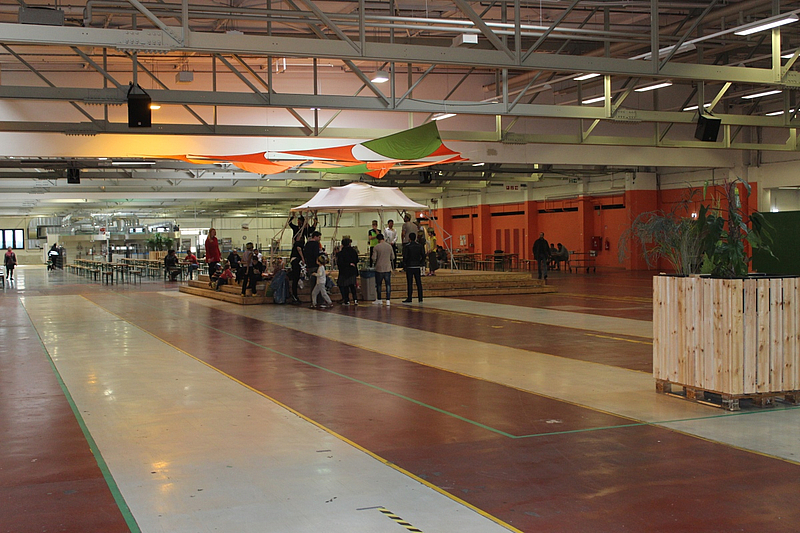
Notunterkunft Mertensstraße - Durchschnittlich 800 Menschen wohnen seit 2015 in der ehemaligen Zigarettenfabrik

Susann Azizi, Bildhauerin aus Teheran, Dachil und Hani beim Aufbau des Zeltgerüstet, welches als Grundlage für die Installation dient. Die von der Hamburger Firma MTS entwickelten "Domos" dienen als Schutz- und Kommunikationsräume in Krisen-, und Kriegssituatinen.

Krönung der Könige - Miran und Ferhat am 8. März
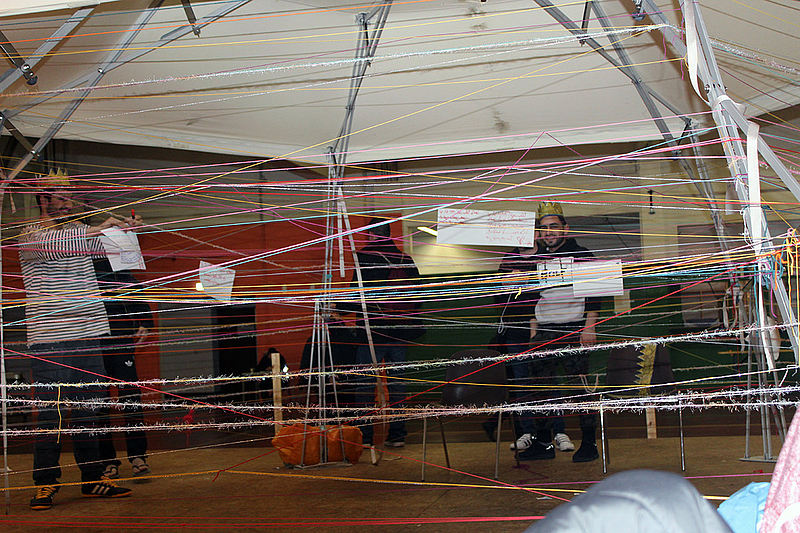
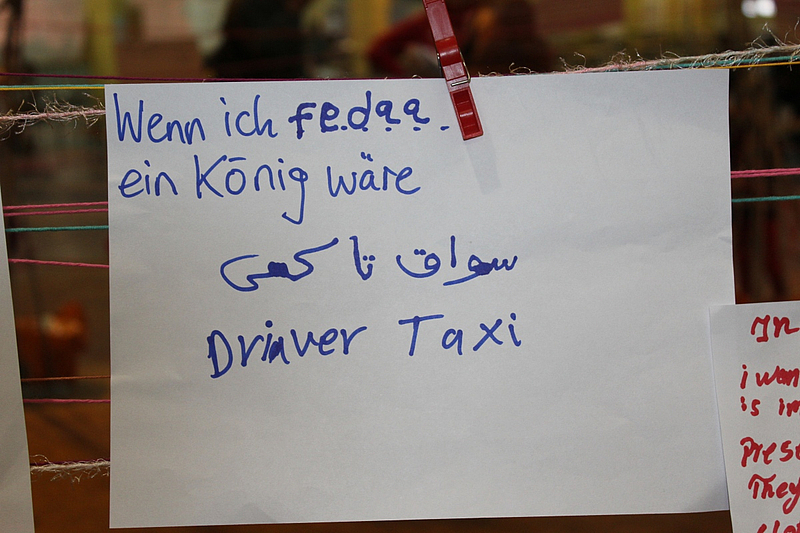
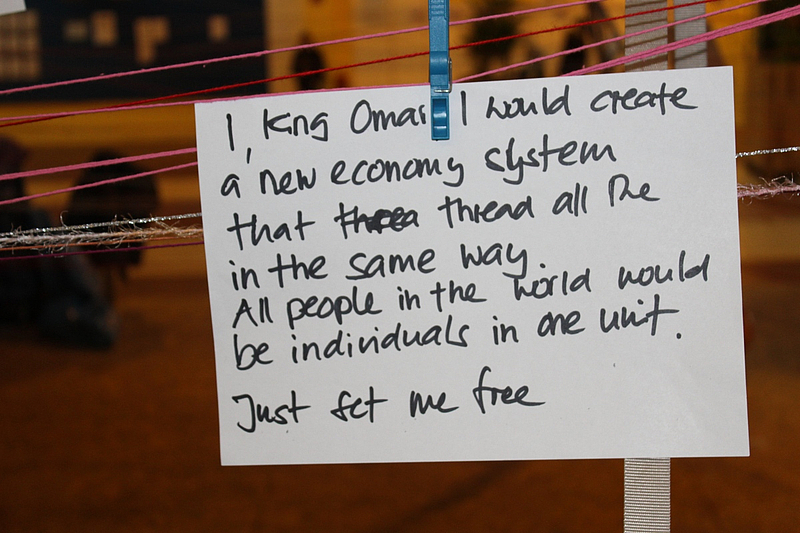
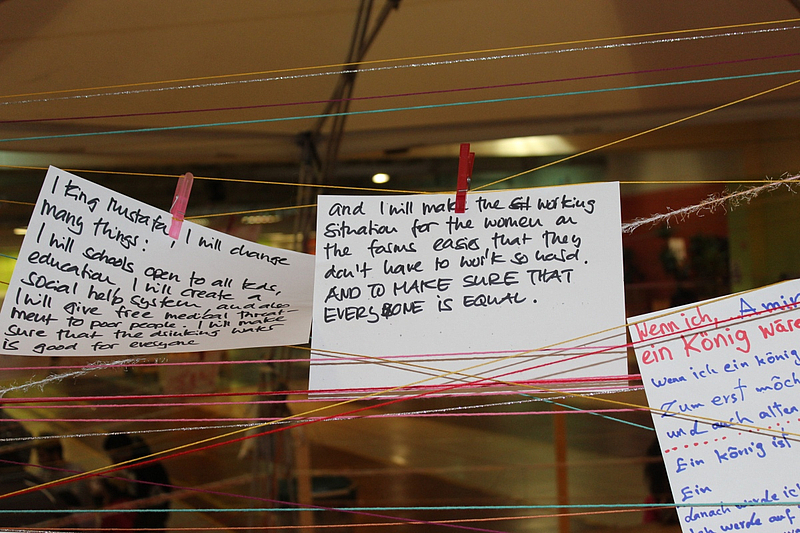
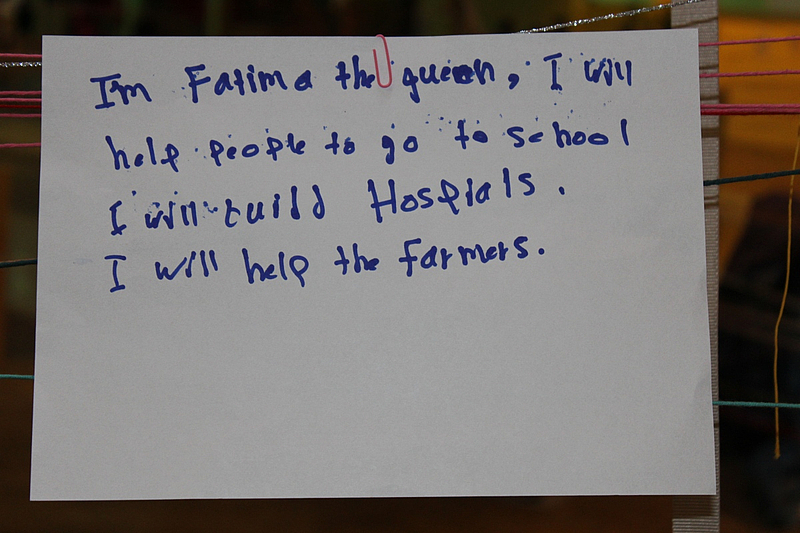
"Wenn ich ein König wäre, dann würde ich...."
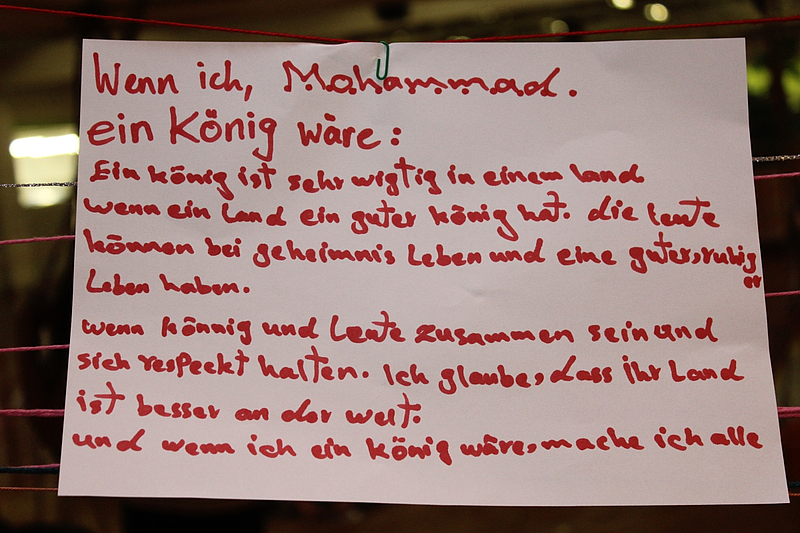
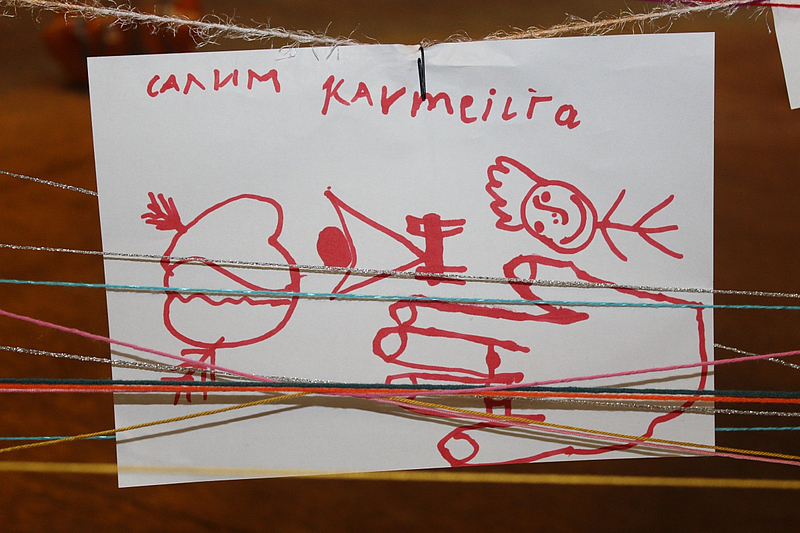
Königliche Dekrete der BewohnerInnen der Einrichtung
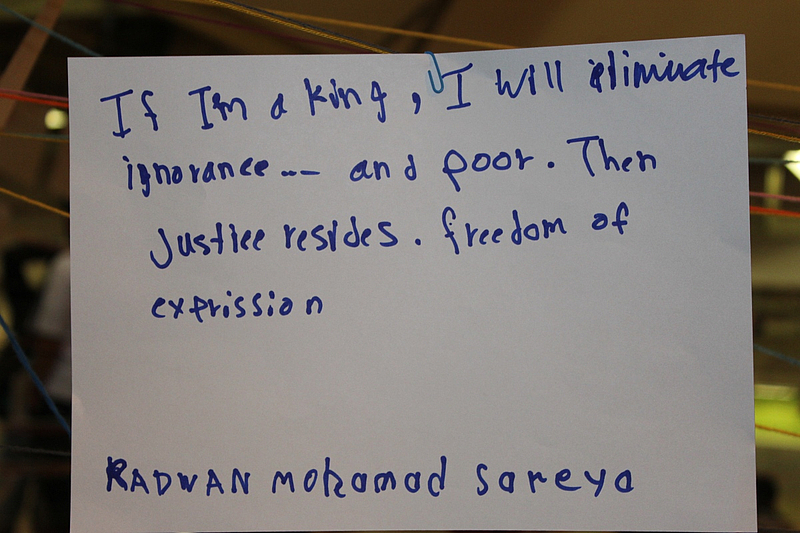
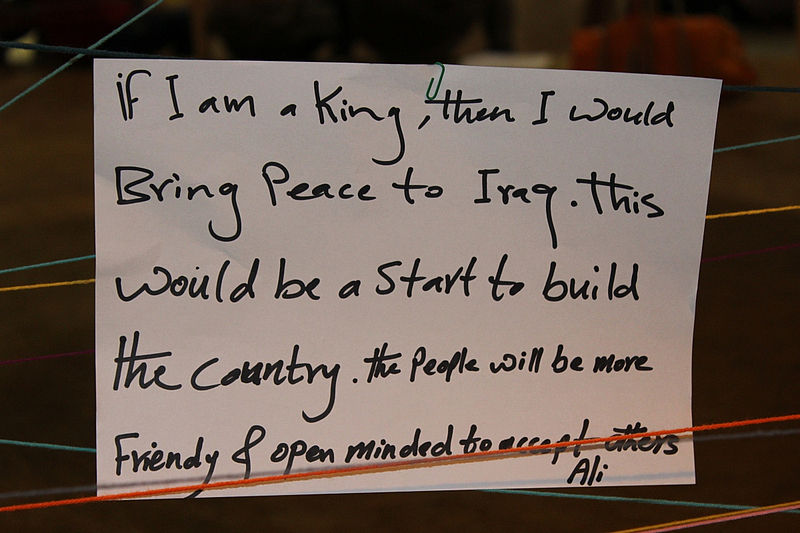
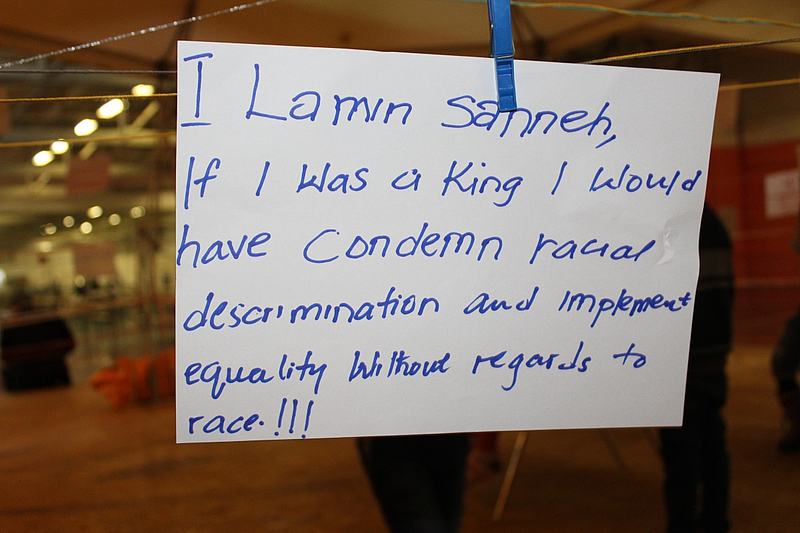
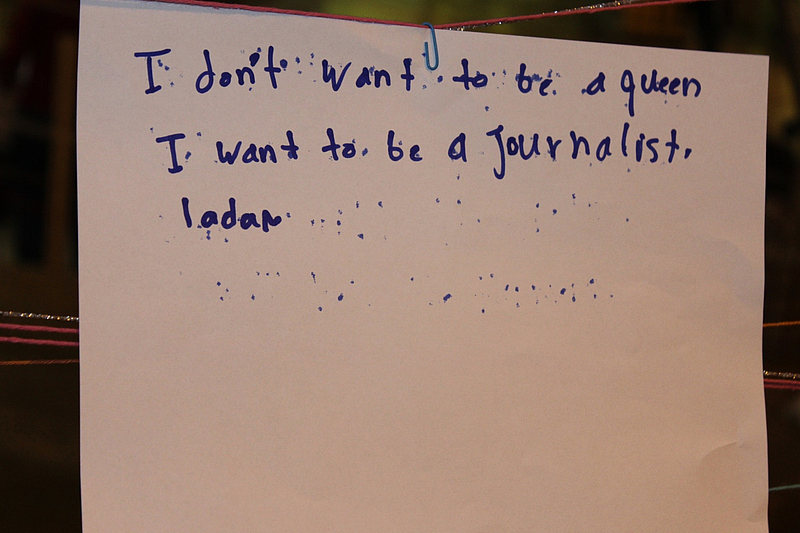
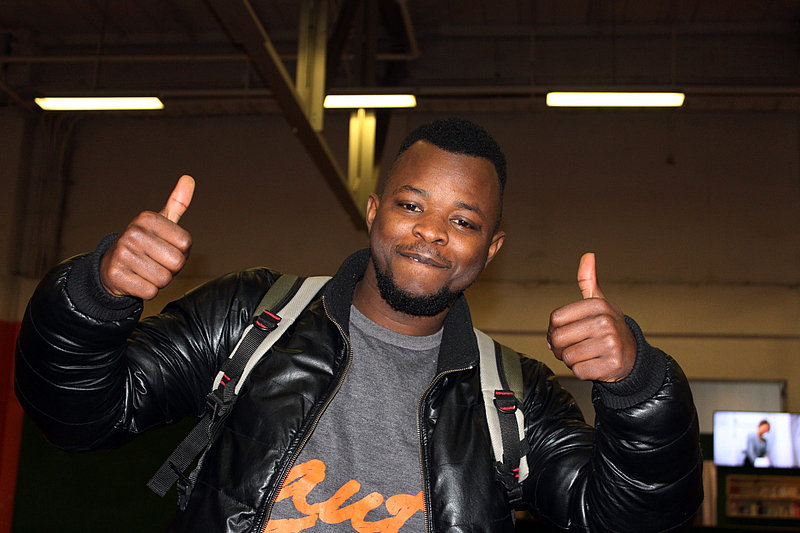
Lamin - Der Mann aus Gambia arbeitete als Dedektiv. Lieber singt er Reggae.
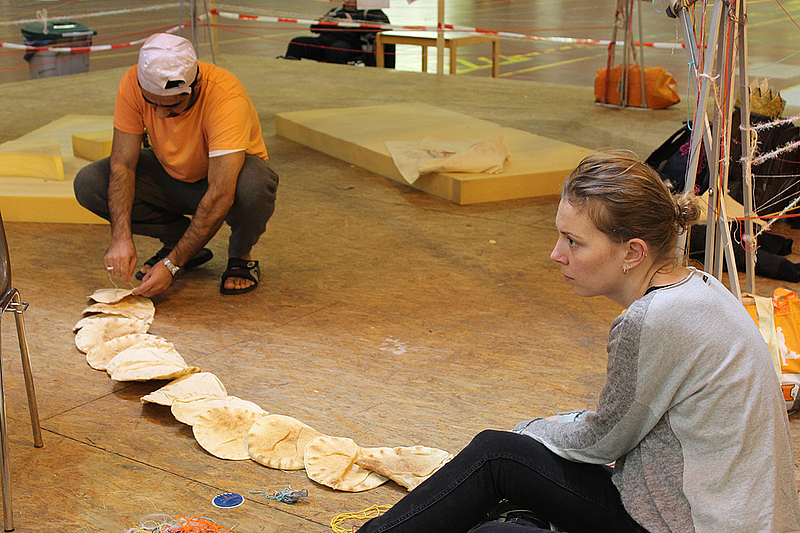
Charlotte Danoy Kent - Sie verantwortet die Zeltgestaltung in der Mertensstraße mit.

Ferhat verlegte seit seinem 17. Lebensjahr Steinfließen. Jetzt beweist er Fingerspitzengefühl an der Nadel.
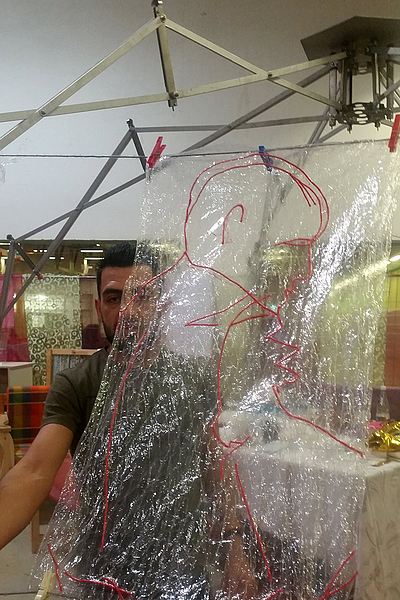
Portait eines Bewohners der Notunterkunft von Ferhat auf Plastikfolie genäht
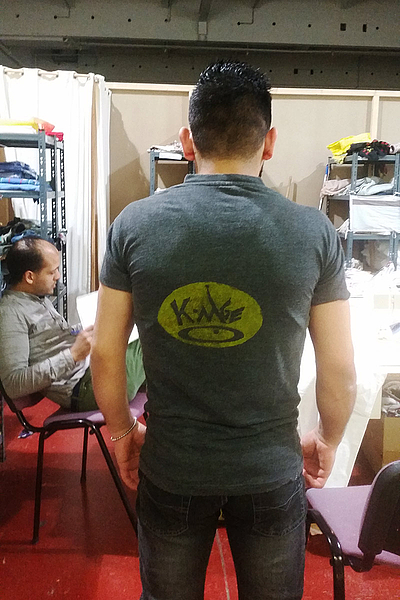
Ferhat: Koenig@Mertensstraße