
Some must leave, others may leave - Ila ellikaa, Serdar!
When he sits down on something that serves as a seat, next to the bench where his housemates are already sitting, as usual all spruced up in a blue and white checkered shirt (if ever it is cold he wears a matching sweater), when he pours water on Nescafé in those glasses, one only needs to squint a little and those green leaves behind him turn into palm leaves. Then you see him enjoying his after-work coffee on the terrace of his whitewashed house.
He has retained his elegance. Once responsible for the city of Aleppo's finances, he is now sitting on a seat made of pallets at the entrance of an asylum in Staakener Strasse, close to Spandau's industrial area.
He has brought six pipes in his luggage. The casket holding them is open for everyone to look at. It is standing on the windowsill of room 107.
"It feels like I have lost so much knowledge," Serdar says when asked whether those 18 months at HEIM have changed him. His brother Kadar is sitting on the bed and soon they will carry his luggage to the car. Serdar's relocation is no big deal, he is not taking much with him.
He does not need to wait any longer. His family's travel itinerary is displayed on his cell phone. On May 6 at 7:05h his wife and three children will arrive in Dortmund flying in from Beirut.
Serdar has spent many days waiting for this information. A video documents his endless attempts to call the German embassy in Beirut. None of them was ever answered.
Within those months of trembling uncertainty about his family's future, the law on residence permits for partners and children had been changed. Serdar lost his faith. Waiting would paralyze him. Another month, he says, and he would have gone back. Viber, whatsapp, Facebook and Skype substituted the books and writers who meant so much to him before his escape: Hegel, Marx, Engels, Feuerbach.
His brother Kadar came from the Netherlands to drive him to Dortmund. Younger than him, he has been living in the neighboring country for the last 15 years. From now on, Serdar's family from Kamishli will try to make the Ruhr area their home.
When learning that his family would finally get their visa, Serdar embraced the world and wanted to leave immediately. However, he stayed to finish his creation at the museum. Even though he could not give his blood to draw with is as he had originally planned.
He says neither his mind nor his beliefs did change while here.
Now, after spending 18 months together, he feels like a blade of grass that is rooted out, he says. He likes Berlin. Serdar was KunstAsyl.
"For the daring which encounters the sea must at the same time embrace wariness - cunning - since it has to do with the treacherous, the most unreliable and deceitful element. This boundless plain is absolutely yielding - no pressure, not even a breath of wind. It looks boundlessly innocent, submissive, friendly, and insinuating; and it is exactly this submissiveness which changes the sea into the most dangerous and violent element."
Hegel's quote, taken from his lecture on Philosophy, is printed on plastic tarp and installed in the foyer of the museum of European cultures. Serdar took a picture of it.
His standard is again: he must be able to read Hegel in German. Only then he will actually arrive in Germany.
After Serdar had left, Atef moved into room 107.
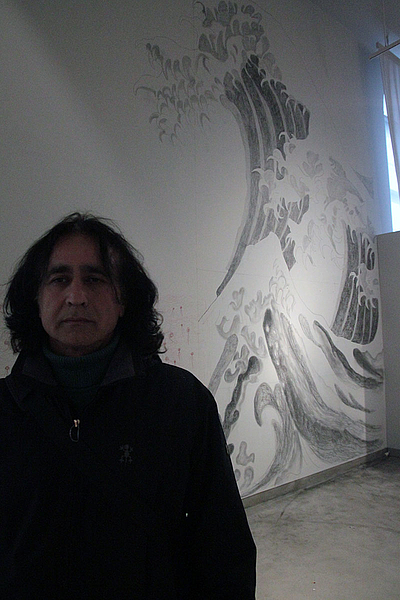
Gezeichnet: Serdar vor einem Ausschnitt seines Werkes im Museum Europäischer Kulturen.
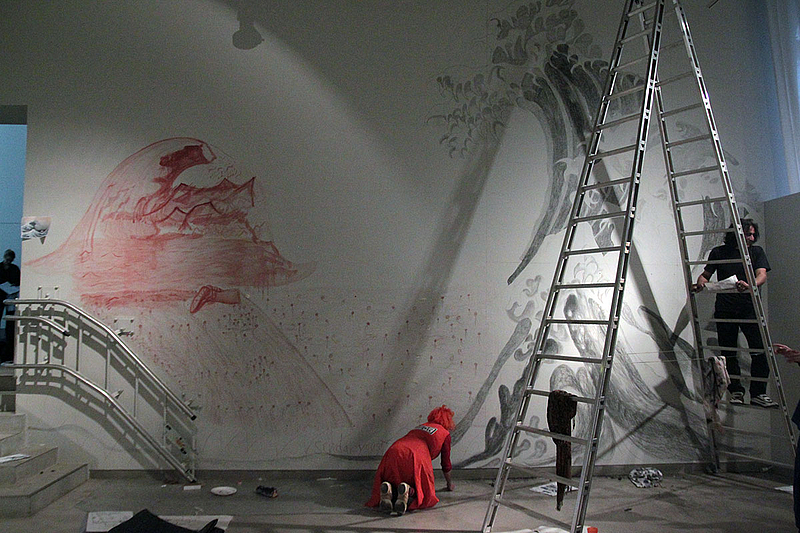
Zwischen Hoffnung und Verzweiflung hat Serdar 18 Monate um seine Familie gebangt.
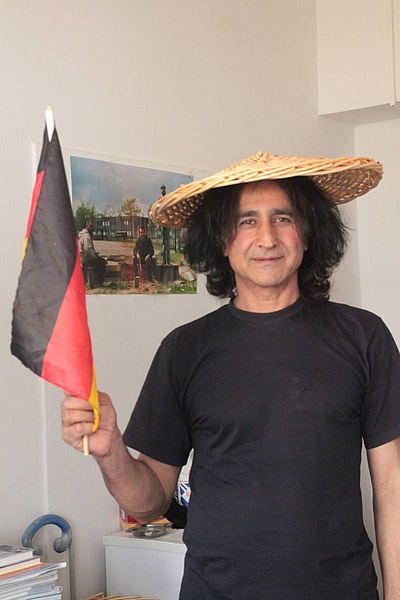
Assimiliert
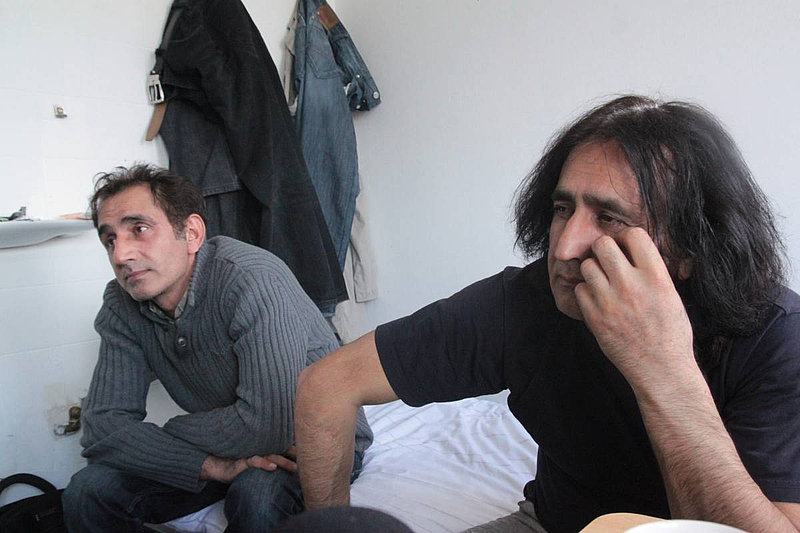
Sein Bruder Kadar bringt ihn nach Dortmund. Serdar wird mit seiner Familie im Ruhrpott leben.
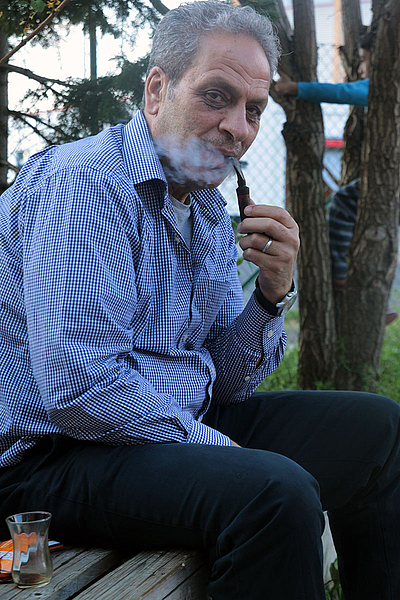
Atef, der nach Serdar Zimmer 107 bezogen hat.
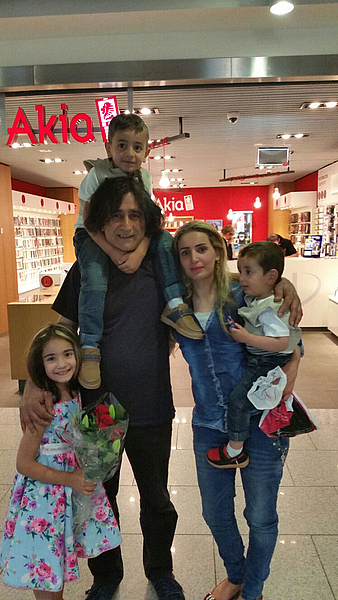
Wiedersehn nach eineinhalb Jahren Trennung: Serdar mit seiner Frau und seinen Kindern Aram, Ara und Kadar. Den anderhalbjährigen Sohn sieht er zum ersten Mal.
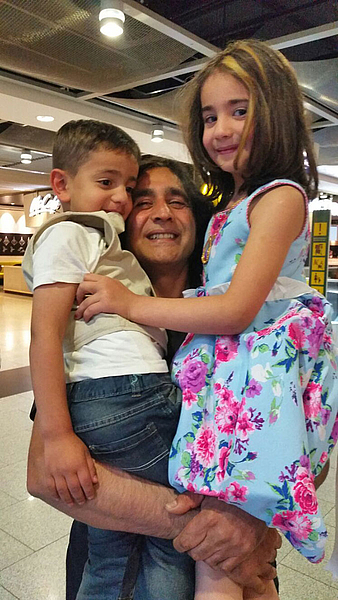
Aram, Serdar und Ara