
To Melisa and Zineta
"Melisa" - many lips forming the syllables of her name, whispering it, susurrating it, speaking it. It is resonating. "Melisa" - her name is floating like a soap bubble through the hallways - her dream of a good life burst Thursday morning at 8 am.
Caught by the upper arm and deported. 9-years-old Melisa and her grandmother Zineta were thrown back to the origins of their agony. They are back in Zineta's house in Tuzla.
But this house is no hûs - because if it was an actual house it would have a roof and a door and the wind would not be able to howl through the holes in the walls. The sun would be reflected in the windowpanes, and when rain falls drops would sparkle on the glass. At night, one could close the curtains.
However, a good night sleep is out of the question.
"Melisa" - Bashkim moves his head in disbelief.
"Melisa" - Serdar shakes his head in bewilderment.
"Melisa" - Kumrije can't help herself from crying.
Since April 14, 2016 there is a dramatic sound to Melisa's name; it stands for sorrow, despair, alarm, and fear. It has become an accusation for all who tried to escape the living conditions of the Southeastern European countries. They know that what has happened to Zineta and Melisa on Thursday morning will sooner or later happen to them too: "Repatriation" in the so-called "safe third countries."
Melisa and Zineta have been with us for three years. They shared a room and sometimes even the bed.
"MELISA" - the mother would scream when the daughter was taken away from her.
Zineta had long taken over custodianship for Melisa as the mother's situation did not allow for Melisa's future. For three years Melisa went to elementary school in Spandau. Until that morning, little after 8 am, when police officers took her out of the classroom. Executive forces had not found her in room 108 when they came to do their duties.
"Melisa" - even Petra from across the street, the bakery shop assistant at Thoben, cried over Zineta, Melisa, and the dignity they lost. This is what she told Aymen. Her portrayal of a massive platoon, the huge number of policemen, pushing into the asylum, correlates to the description of those watching in the hallway.
Zineta is a Romani from Bosnia. She has a large family. She has been trying to create a home within the 14 sq. m. she had, for all the grandchildren her daughter's had given her. Melisa, the "honey sweet," would fight fearlessly against each and everyone. She would rout everyone, verbally and physically. She was a beater, joining a boxing sport's club at the end.
Melisa knew how to look deep inside of you. She suffered more than she could stand.
Zineta exercised herself in what we call "an orderly life in Germany." She has been trying to catch up with this life, from office to office, from lawyer to lawyer. She did not succeed.
"Melisa" - Fahrije is tilting her head.
Everyone is crying over this girl, whose deportation caused every illusion and construct of ideas to collapse. Melisa triggered weltschmerz.
The police came with three vehicles. To the horror of all, the seats of one of the busses were already occupied with grown-ups and children. They too had been taken out of their waiting rooms for a better life to be deported.
"Abandon all hope!"
Human dignity is violable.
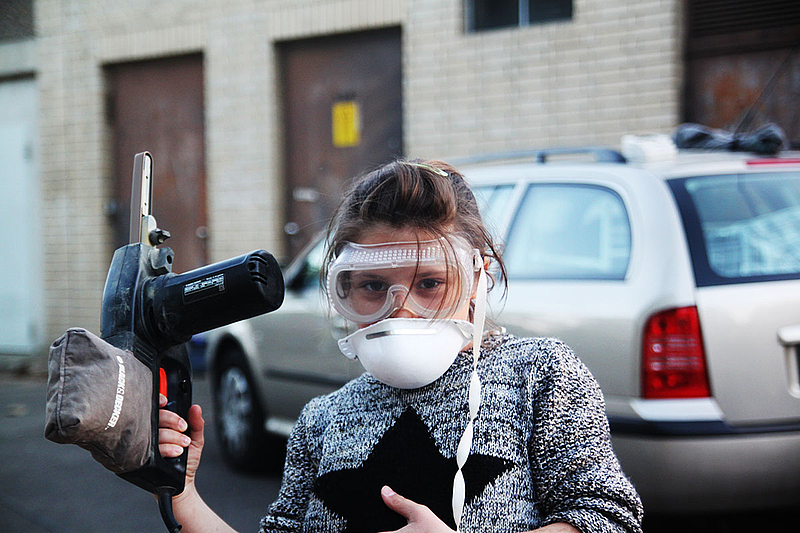
Meöisa in May 2015
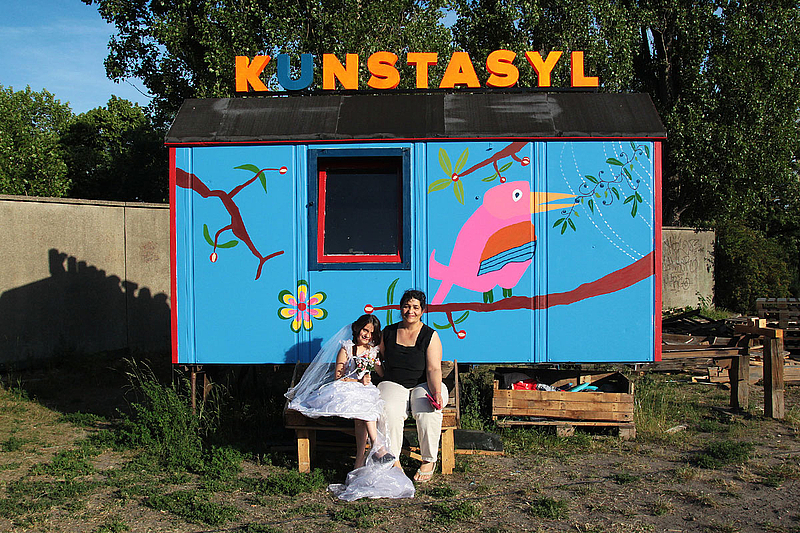
Zineta and Melisa
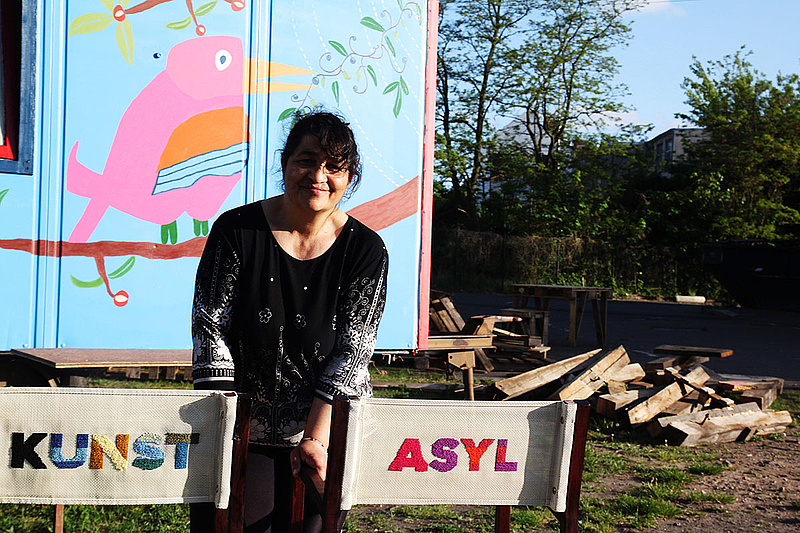
Zineta - caught between two stools
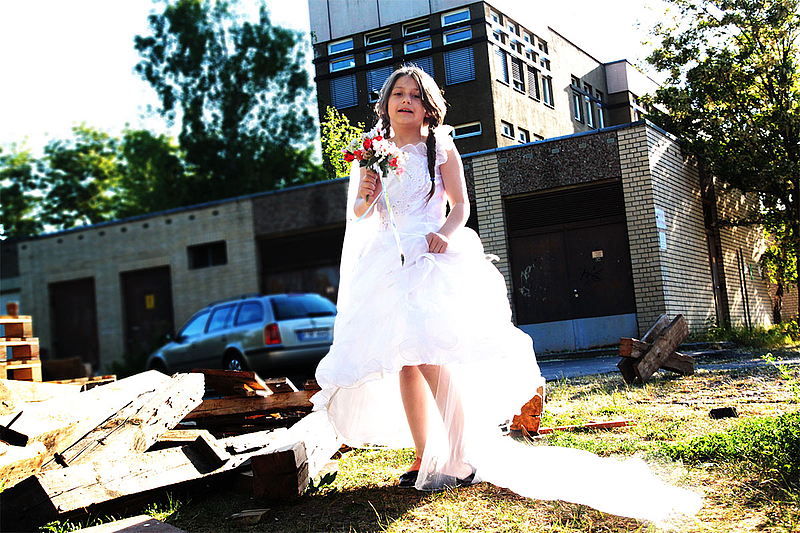
Melisa - Romance in front of rawness
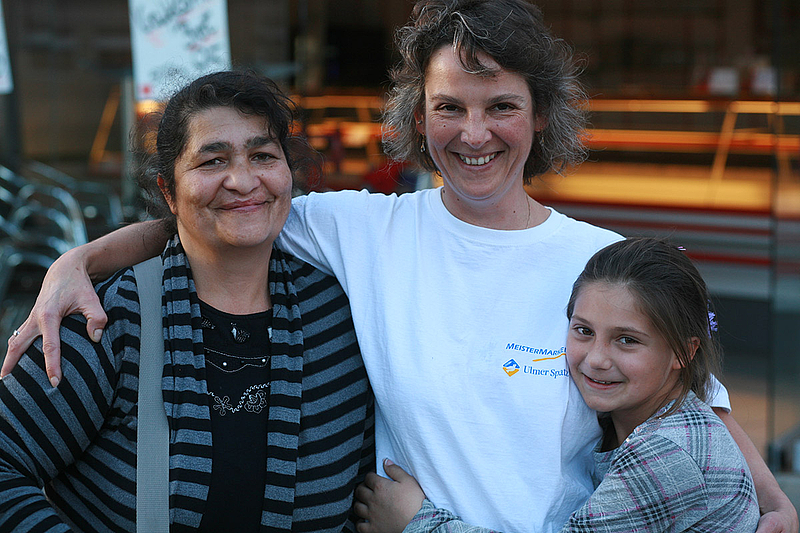
Zineta, Petra and Melisa. The three ladies became friends over the last three years. Melisa was daily guest at Petras cake counter
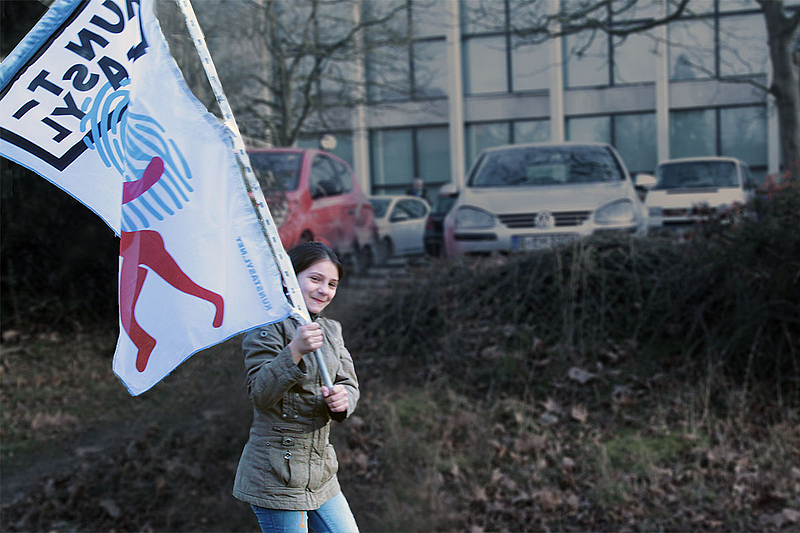
Melisa nailing the KUNSTASYL colours to the mast! On her way to the kick-off event at the Museum Europäischer Kulturen in Berlin in March 2016.