
Utopia
While they sawed and tightened screws, the kids and I would sew a "wearable" cover for the deck-chair, made of a palette wood. For weeks, this has been Khaled II.'s favorite spot to hang out. He is from Syria and worries about being deported to Italy. His "finger print" weighs heavy as a piece of evidence at the hearing in court. If ever the weather is nice, Khaled is out in the garden at least three times the day to relax. Stretching out on the deck-chair reminds him of Syria and the sea. Sometimes he stays out there on the chair until 1:30 am.
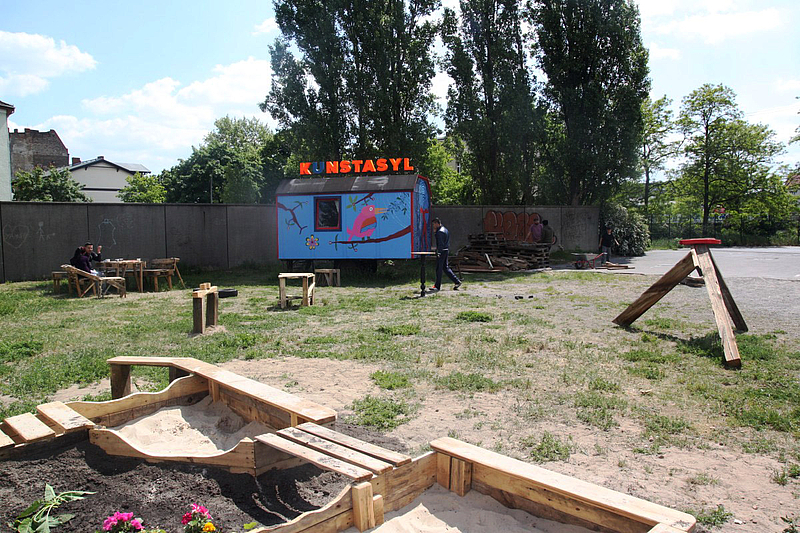
It's a sunny day, cloudless. The colored sunshade - an artifact from last year's exhibition heimisch [feeling at home] brings the idea of a carefree setting to perfection.
As if Christopher Columbus had discovered a coast on the Bahamas just now, Bashkim's cry "DUBAI" fills the courtyard - an enthusiastic exclamation, triggered by the colored sunshade, surrounded by our small playground and the deck-chair made from palette wood.
This reminds me of the two ladies who came to visit on April 29. They were the first of the Thoben regulars to cross the street and to stumble into our garden. "You do the talking," one would encourage the other. Both were dressed in almost similar jeans with matching jackets.
So, while one spoke the shy one made herself comfortable on the deck-chair. Supposedly, they had been watching us for a while and now they were here to tell us how much they liked the things we did and that maybe we should put a up sign, next to the entrance, announcing that people could come and visit. After all, most would feel uncertain.
When I tried to explain the project to her she would interrupt me. "She wasn't known for having a particularly ambitious mind," the lady in her 50s started to say, "every night she would watch an episode of Utopia on television. During the day she would observe us to finally realize the emergence of Utopia in the daily transformation of the compound. She had been touched by her findings. That was all she wanted to tell us." Then the ladies took leave.
While I write, I receive an email written by Carina, who is doing translations for us. Here is what it says:
"Last night, we went to Charlottenburg for dinner. Upon leaving late at night, at 1:30 am, a young woman came up to me on the street. She was agitated. "Do I look like an Asylum seeker?" she asked, and I would counter, "How does an Asylum seeker look like?" And again she would ask, "Do I look like a refugee?" It turned out that she - born in Berlin to a Turkish couple - had been to the Carnival of Cultures, wanting to give out invitations to her own art project, when people mistook her for a Romanian, begging for money with the help of scraps of paper. We would stand there for a while talking; about home and parentage, about language and belonging. […] Un unsettling event, that would prevent me from sleep that night."
Maybe I should rename this entry: "To the unknown refugee" rather than utopia.
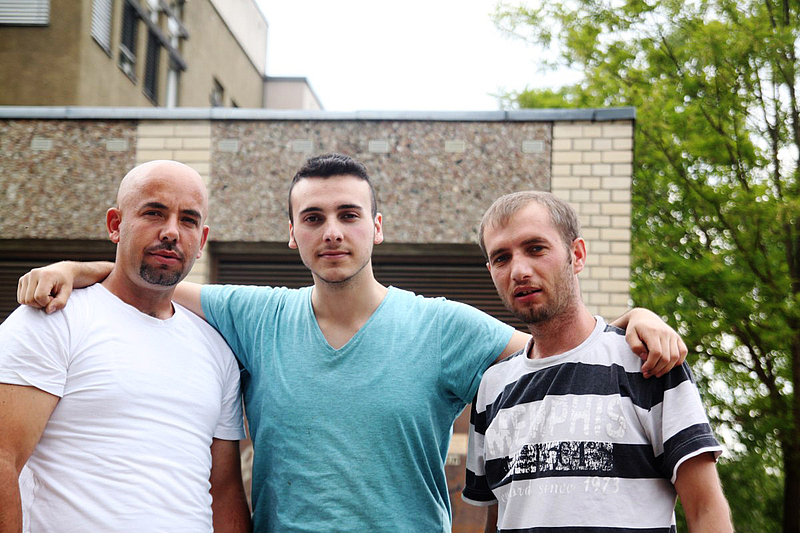
Bashkim | Endrit | Gazi
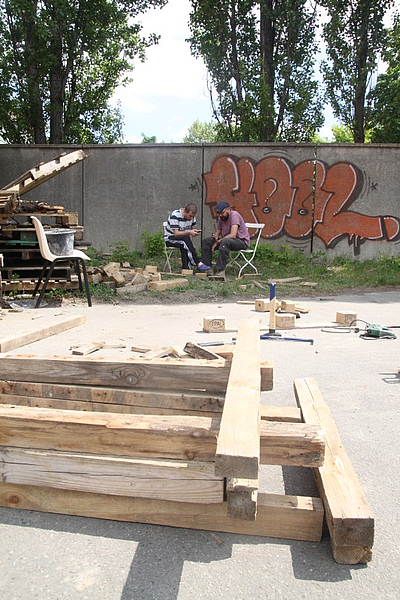
Gazi | Aymen
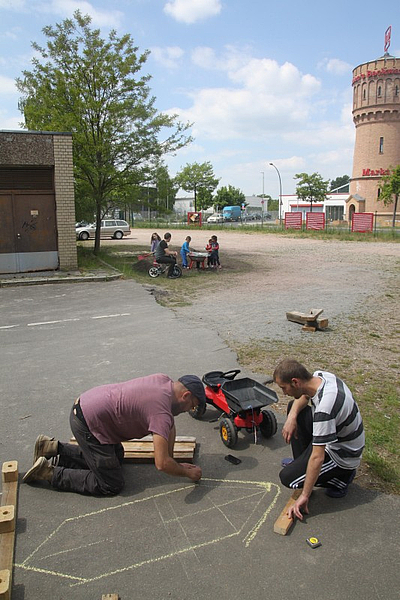
Aymen | Gazi
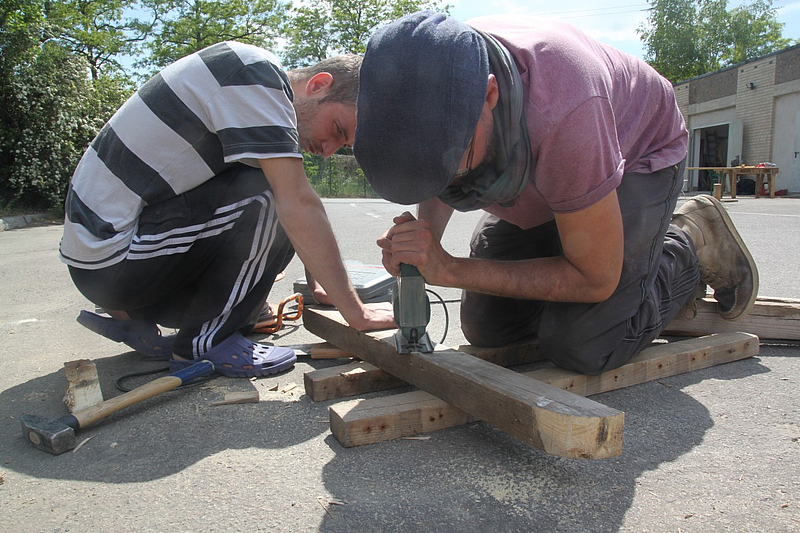
Gazi | Aymen
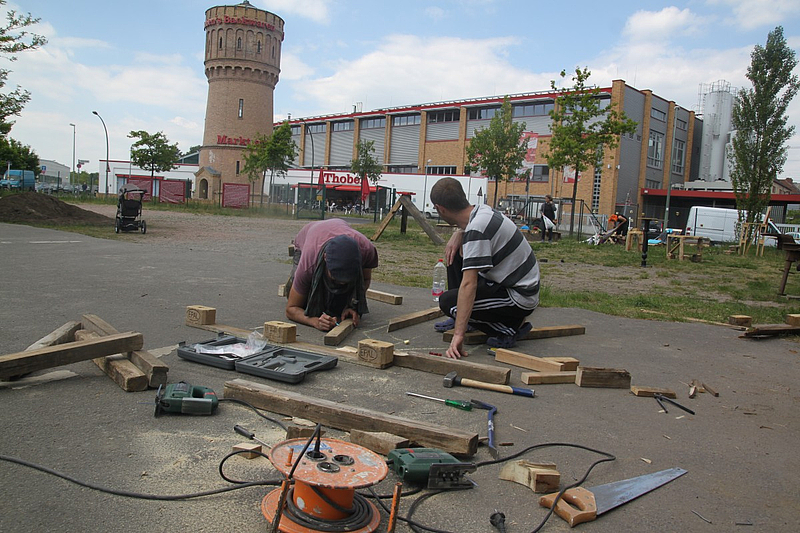
Aymen | Gazi
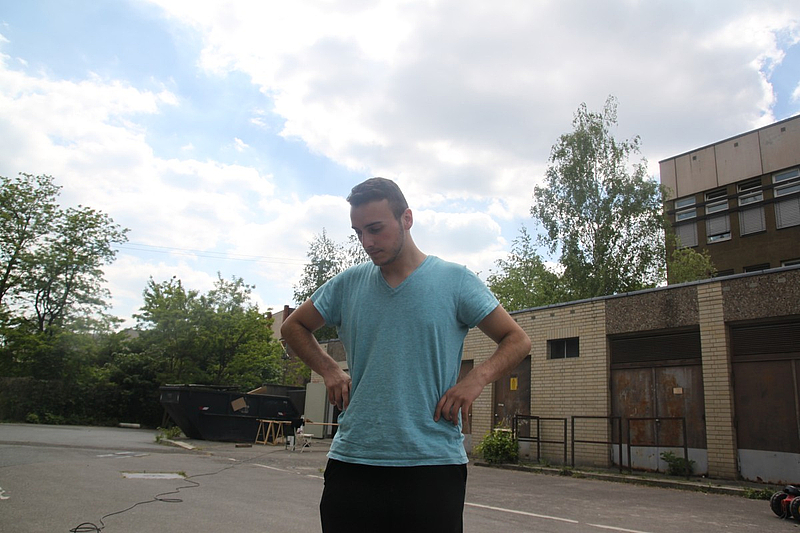
Endrit

Anziehbare Sitzauflage für Khaled II
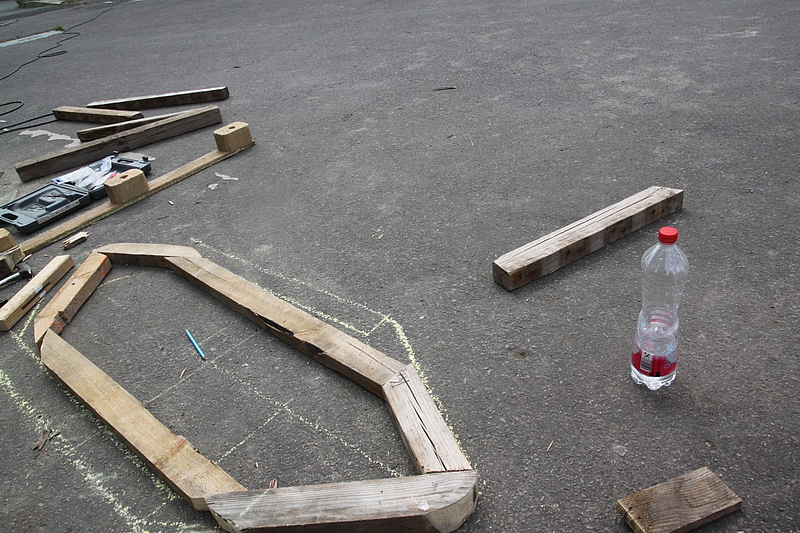
Grundriss Blumenkasten Modell "Heilbronn"

Tuana
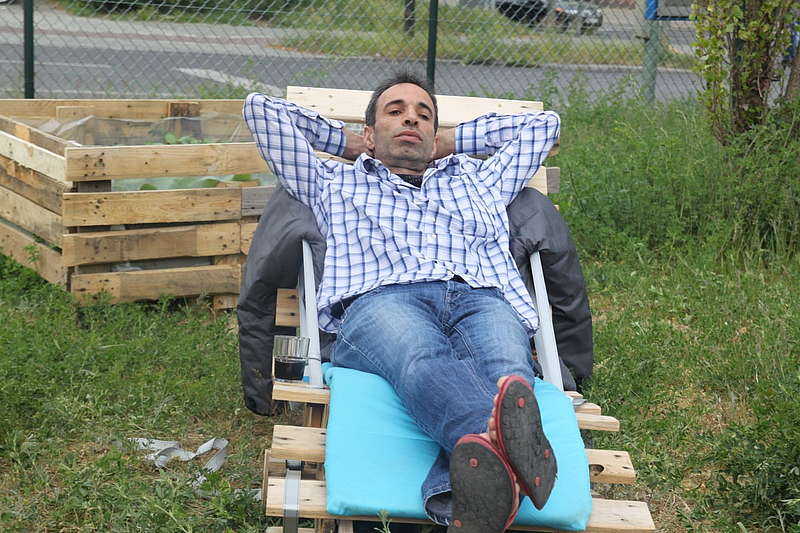
Khaled

Bashkim
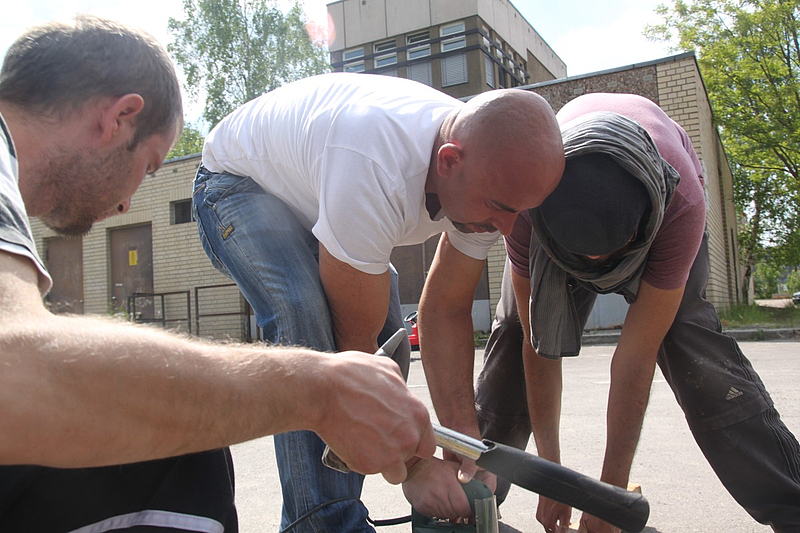
Gazi | Bashkim | Aymen
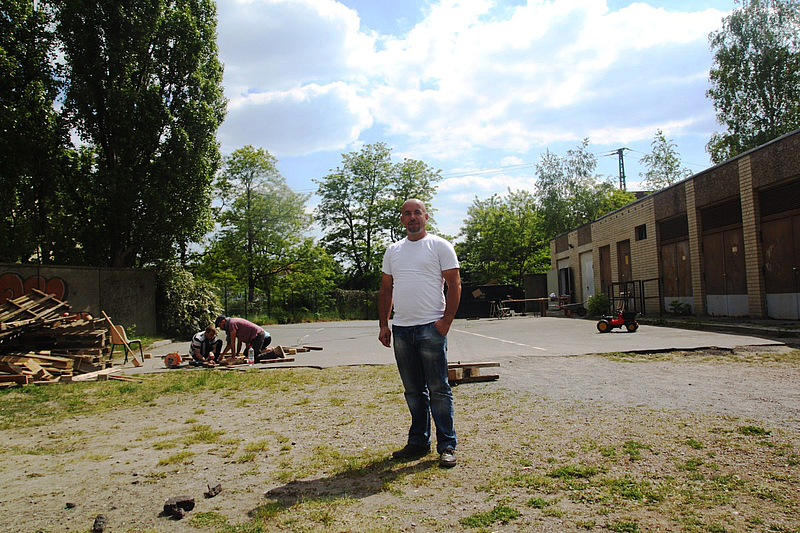
Bashkim
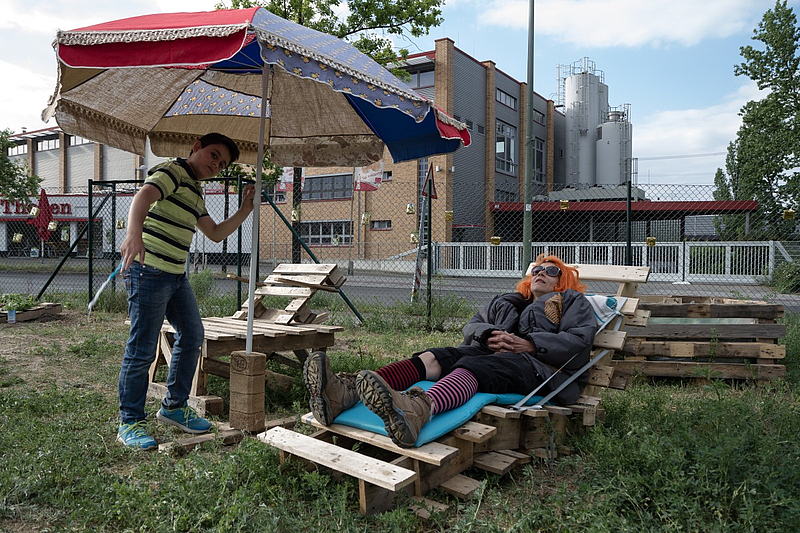
Khaled | bc
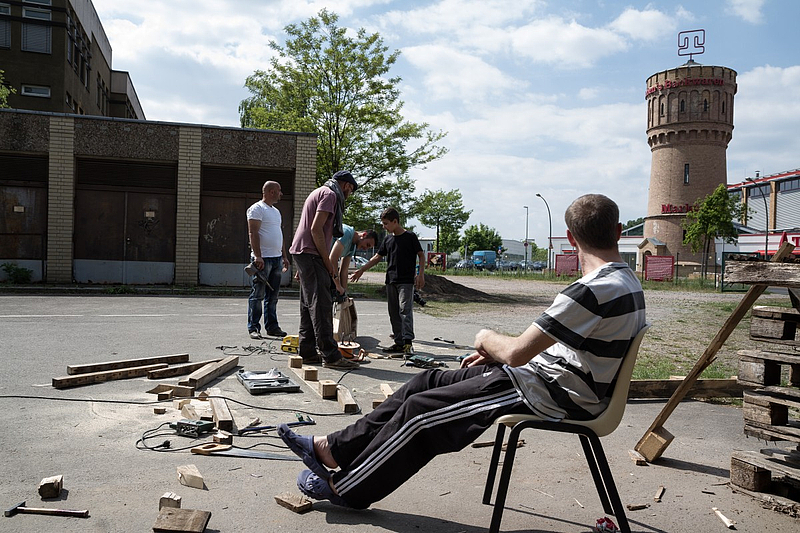
Gazi | Aymen | Endrit | Latif | Bashkim
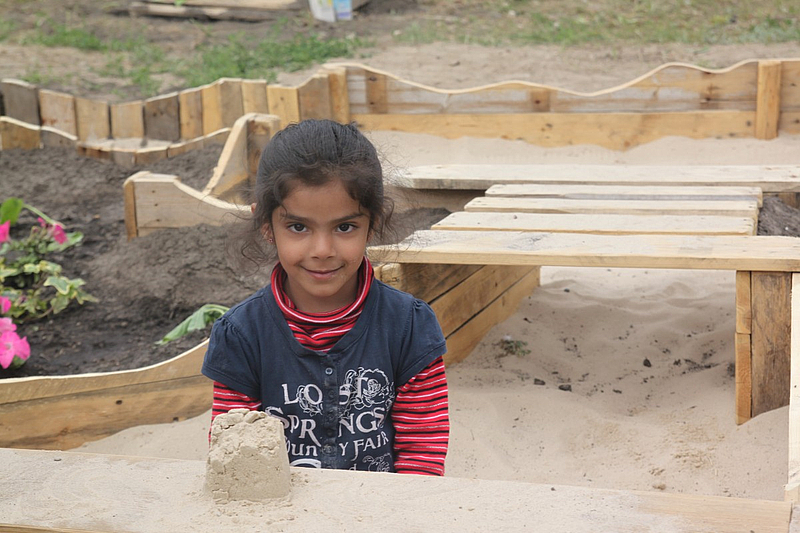
Ayjza
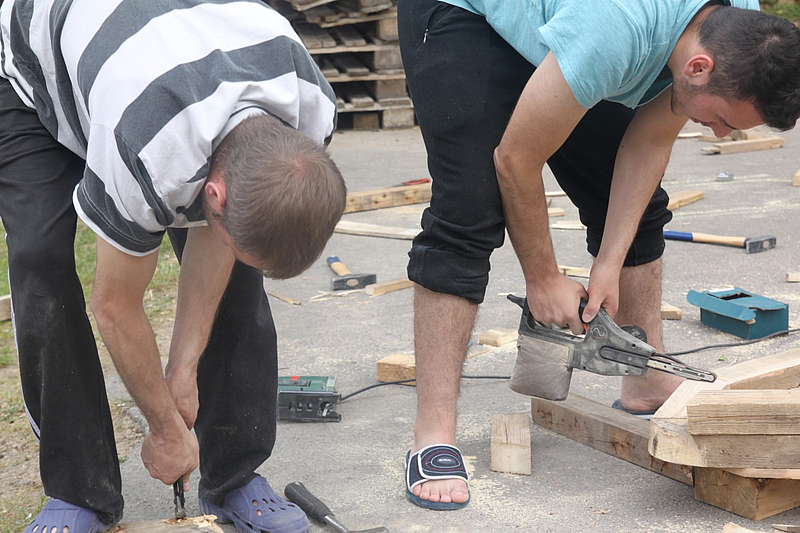
Gazi | Endrit
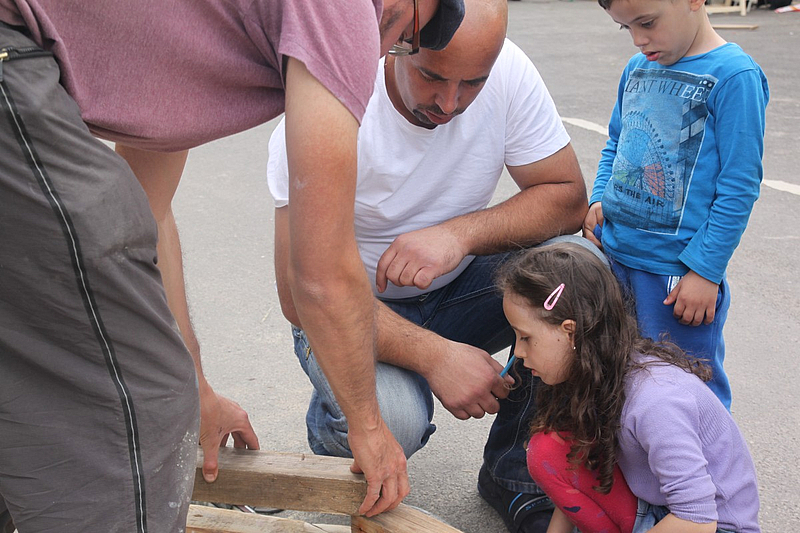
Aymen | Bashkim | Fatime | Omer
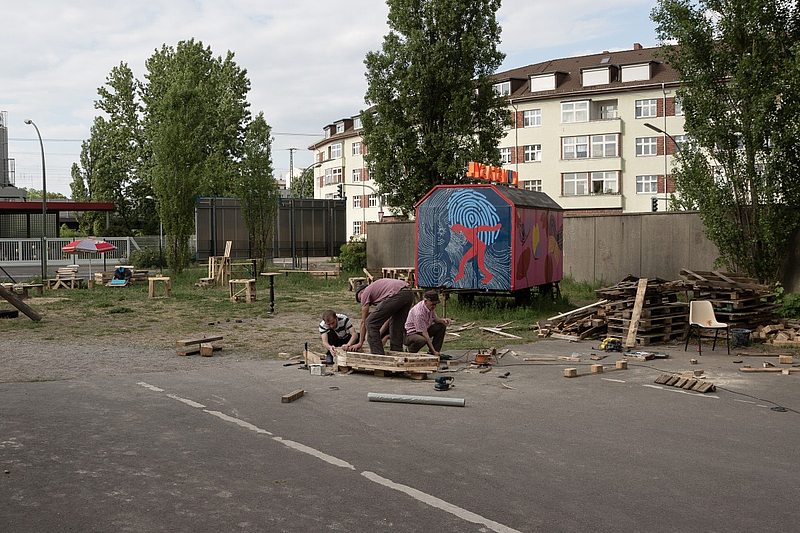
Gazi | Aymen | Shabban

Sham
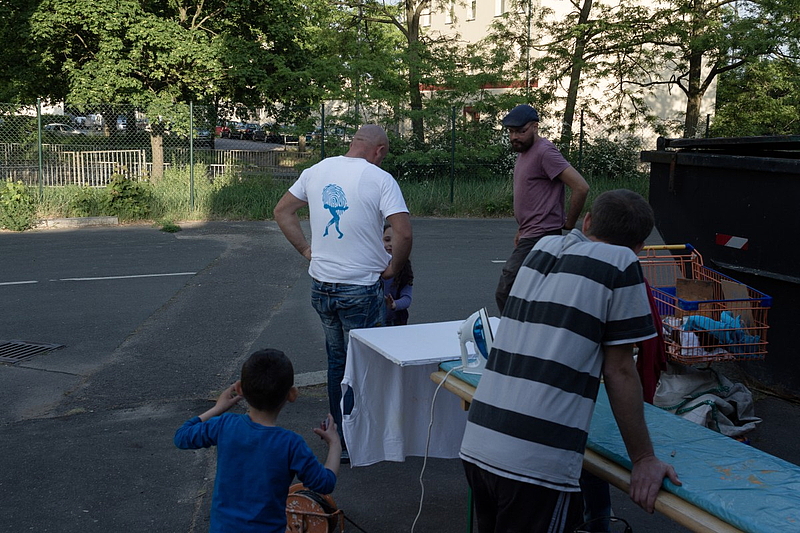
Omer | Bashkim | Fatime | Aymen | Gazi