
"What about Love"
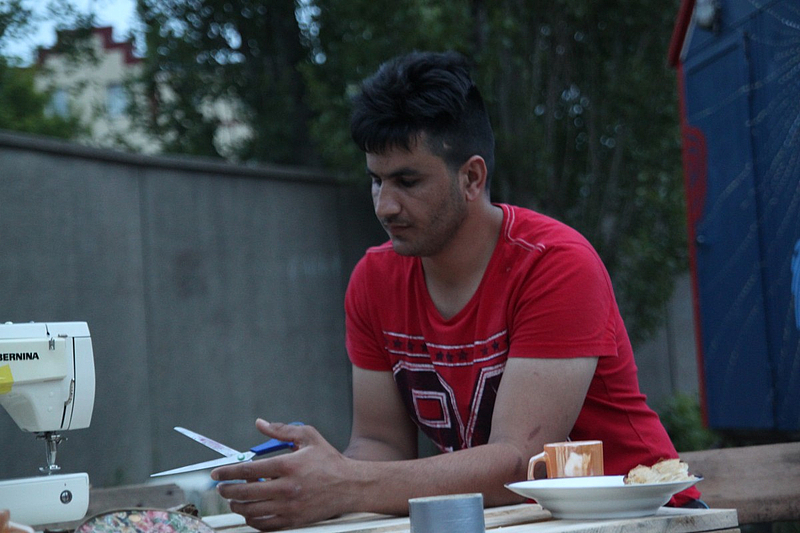
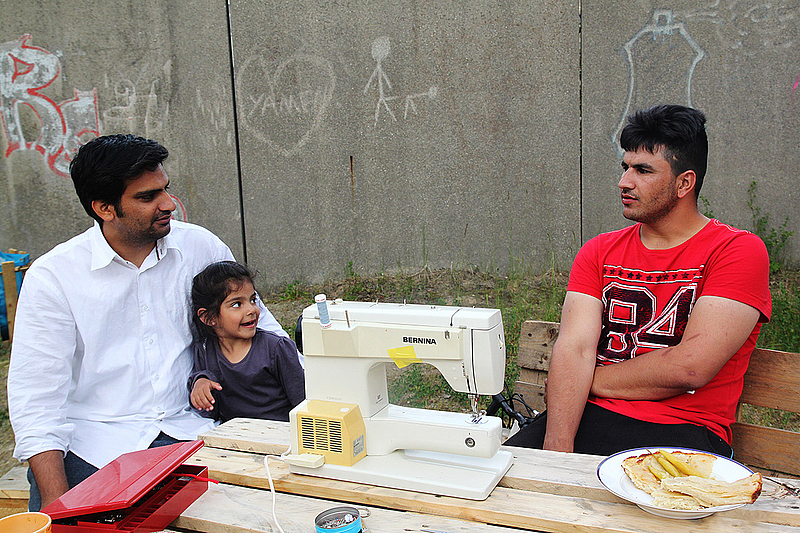
Latifs hand rested in the dim light of the sewing machine. Using his mother's dishcloth he exercised himself in sewing. Before, the cloth had covered the Fija he had brought outside around 8 pm as a dinner for Dakel and me.
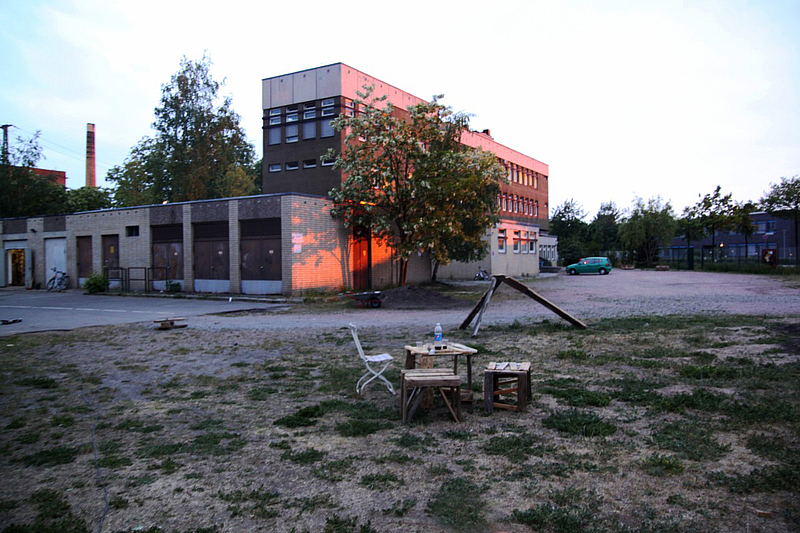
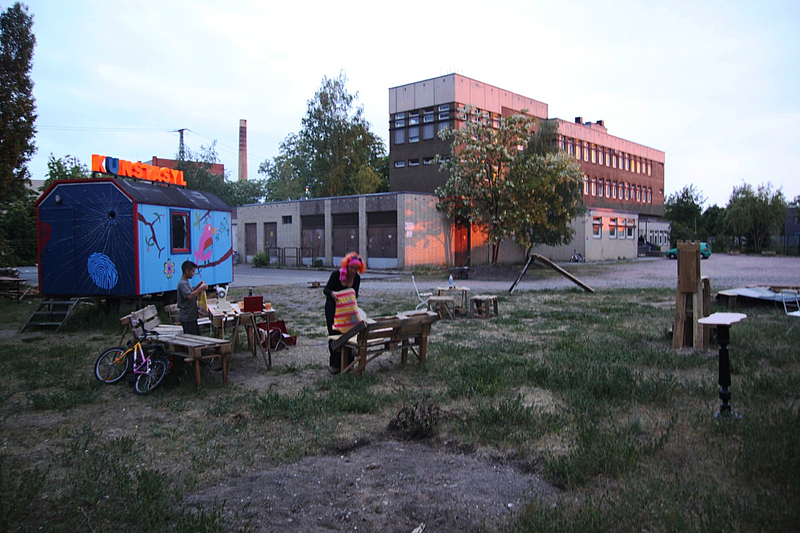
In the light of the setting sun we had set at the table in front of KUNSTASYL. In the light of the setting sun he would then ask "What about love?" I wished for a jukebox, to let faith - love - hope rain on us to the sound of Purple Rain, taking my pamphlet for the greatest among those.
Latif would smile and grin at the same time. All other content of our talk is subject to self-censorship.
At the end and somehow insisting, Latif would ask again, "… and you Dakel? What about love?" However, the respondent would postpone his answer.
Everything we did that day was held by an adagio. Never before had there been so many people on the compound, asking questions about the location and our work. Luckily, the resident's anxious eyes were for no reason when the police arrived in a bus. The friends and helpers only wanted to know more about KUNSTASYL. Unfortunately, there was no time for a cup of coffee on the premises but the sound of squeaky brakes went well with their enthusiastic remarks "That is so cool!"
A musician from Spandau thought he had discovered a new arts venue, only to be amazed when his question "What is this?" was answered with "This is an asylum for refugees and asylum-seekers." A neighbor from Brunsbüttler Damm came to ask for advice, on how to deal with overcrowding in an apartment house where Roma refugees were assigned. And yet another neighbor offered a load of wood.
Ramiza had served me some coffee, sweet and strong, to start the day. We had sat at that very same table in front of KUNSTASYL. There was not much time left to talk to the young couple from Bosnia. In a few days, Zlatan and Ramiza would "voluntarily" go back to Tusla. As expected, their application for asylum had been neglected.
However, this time Zineta had had no leisure time to translate a conversation. She would stand in front of us, out of breath with her long hair falling over her shoulders. She was thinking about her husband, who was in the hospital. What is more, she was breathless due to all the problems she was trying to cope with and that were depressing her. Rushing to go see her husband, she pulled a pink ribbon out of her bag. At night, she would use it to put Melisa's hair in a bun - a holiday hair-do for the wedding of her brother's son.
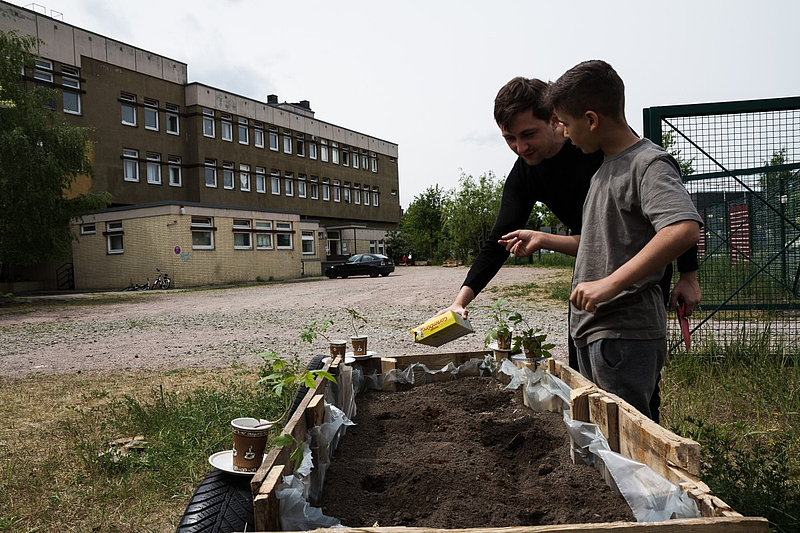
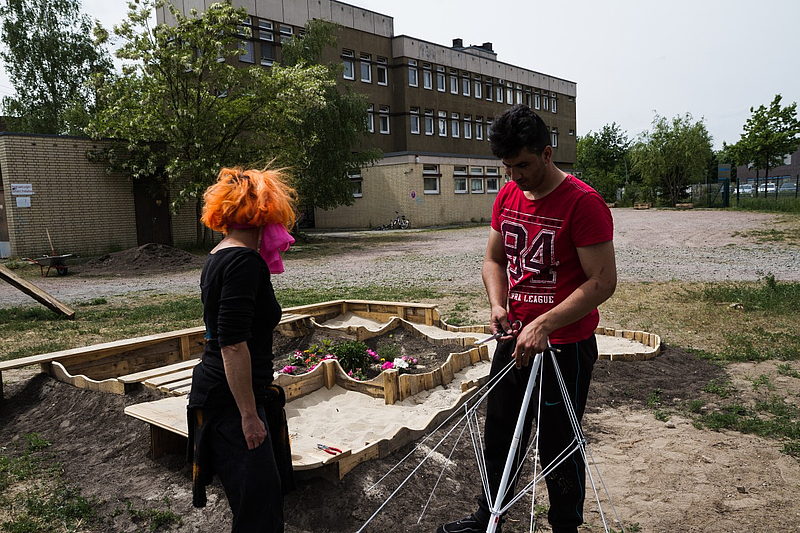
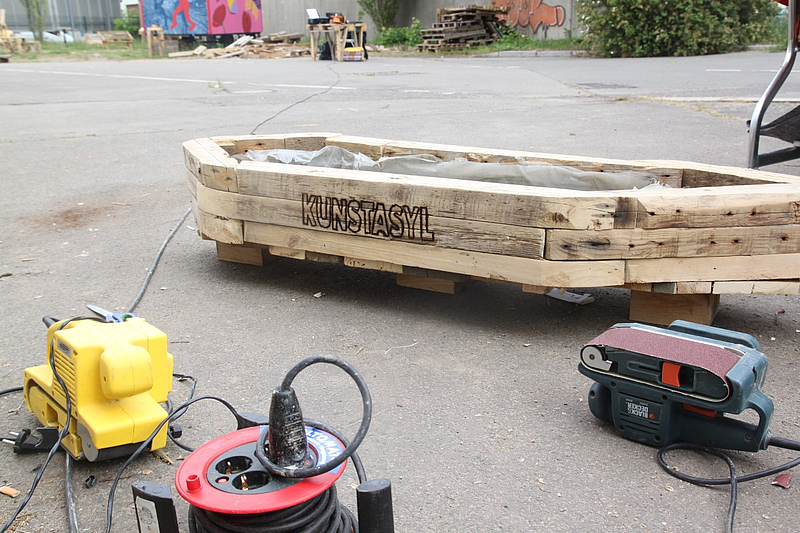
We had started our daily work. One had to graft the delicate tomato plants (Latif) and we had to sew seat cushions for the garden furniture (Barbara). The sunshade had to be fixed (Dakel) and the flower pod "Heilbronn" needed to be polished (Endrit and Gazi). We had to run errands at the hardware store (Dakel) and new rubber stamps needed to be cut.
Till was slowly recovering from the day before. KUNSTASYL - represented by Abd Elrahmann, Mohamed Firas, Dakel, and Hameed - had been invited to meet with Manuela Schwesig - the German Federal Minister for Family Affairs, Senior Citizens, Women and Youth - and the press. At the same time, Aymen, Therry, and Till had struggled through the day under a rainy sky. Full speed ahead and energy sapping at the same time.
Hameed brought the mail. The young man, 23-years-old and from Afghanistan, suffering from a knee injury and still recovering from surgery, has to stand up now against being deported to Bulgaria. The notification was issued according to Dublin II and III. Raffa too would soon leave Berlin. But in his case it could have been worse: Germany would pay his Austrian fingerprint with a ticket to Vienna.
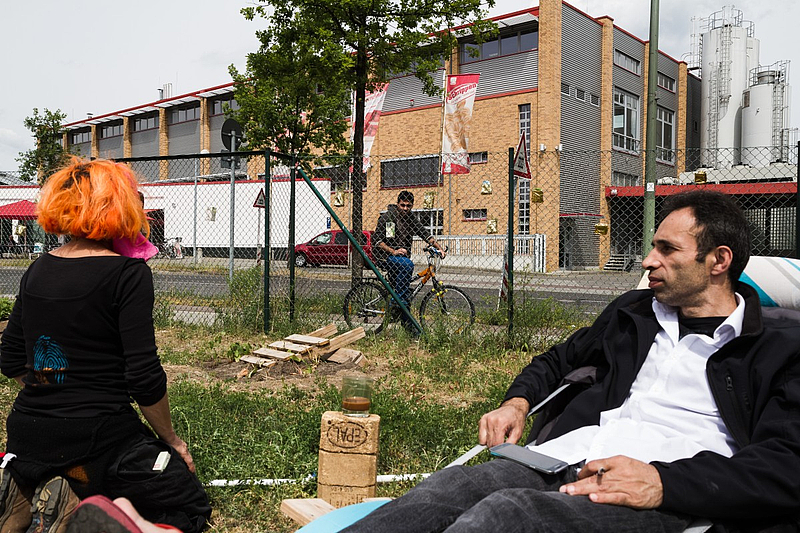
Later that day, Khaled II would slouch on the deck chair for an hour. He had made this a habit. Next Monday he will undergo surgery. "And then - police, deportation, return to Italy." He suggests that everyone complaining about the procedure for granting the right of asylum in Germany should apply for asylum in Italy. No food, no money, no clothes, no accommodation. "Where will I sleep if ever they send me back? In the streets?" His last best hope is his lawyer, going after legal tolerance.
No good news for Gazi either. His application for a temporary work permit to be able to work as a facade builder and plasterer had not been approved. On the grounds that the pay he was offered was way below German standards.
Whether I miss his philosophical sayings, Khaled asks me, when coming to see us for a few hours after school together with Sham. Khaled and his family - all of them were really close to us - moved out a few days ago into an apartment in Spandau.
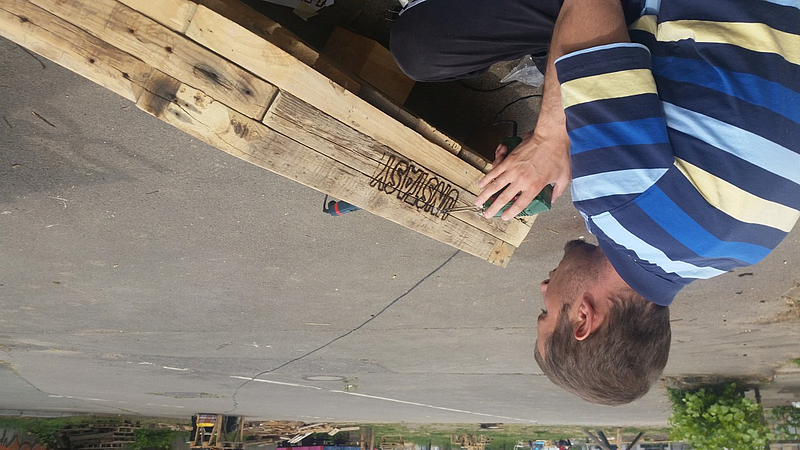
It took Serdar only a few hours to build another garden bench. While Latif, Dakel and I talked about love Mohammed Firas would engrave KUNSTASYL into the backrest with a soldering iron.
Next week, Dakel will start piano lessons. Beethoven's "For Elise" is in the air.
Romance at HEIM.
1 Flia, or fli or flija, is a typical meal of the Kosovan-Albanian cuisine.
dakel
Gordon | Latif
bc | dakel
Gazi
bc | Hameed | Khaled
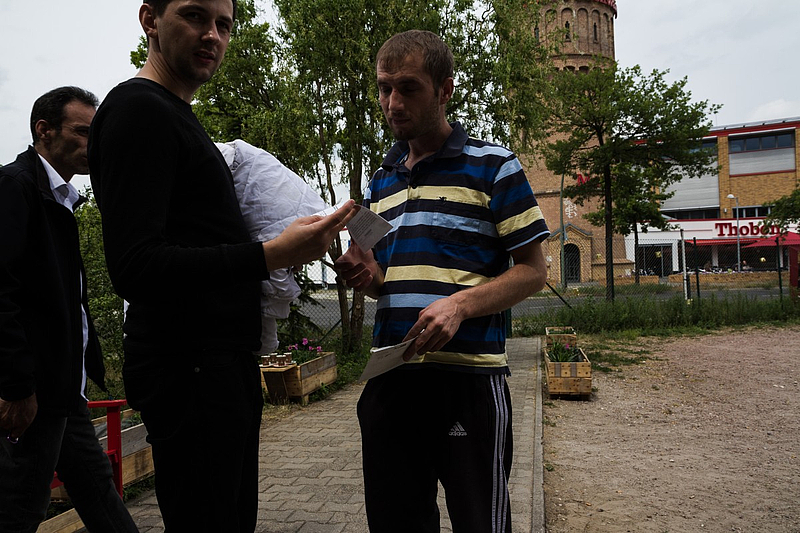
Khaled | Gordon | Gazi
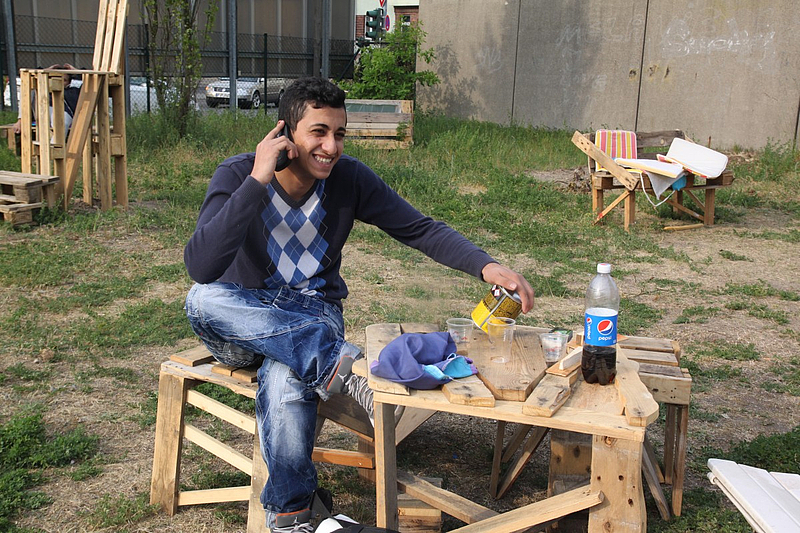
Raffa
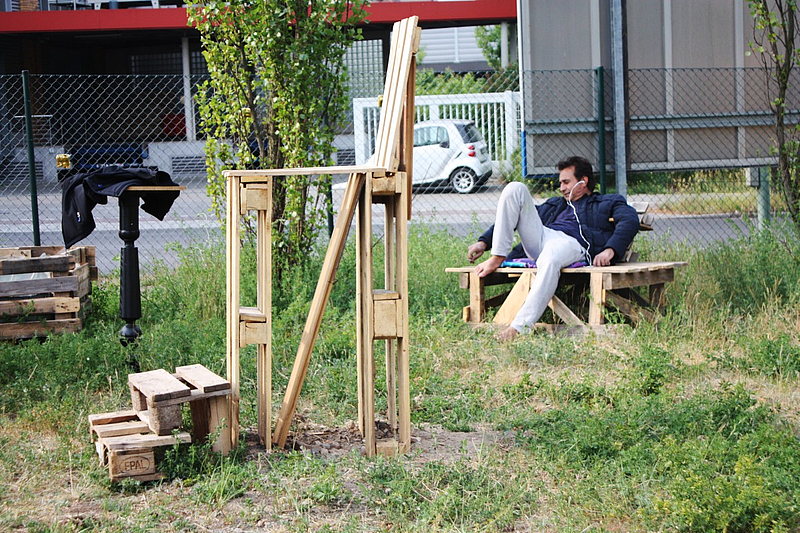
Serdar
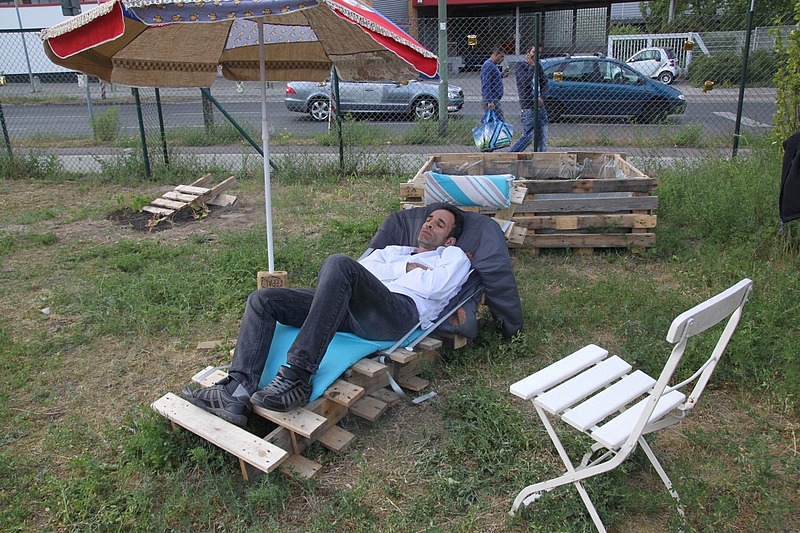
Khaled
Amir | Ayjza | dakel
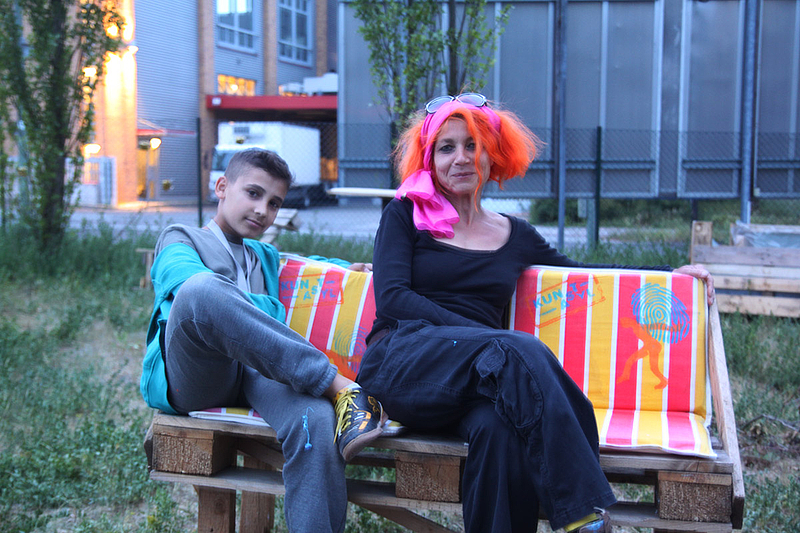
Latif | bc
Amir | Ayjza | dakel